…to apprehend
in a sudden brine-clear though
trembling like the tiny, orbed, endangered
egg-sac of a new world:
This is what she was to me, and this
is how I can love myself
as only a woman can love me… ‘ From Transcendental etudes by Adrienne Rich
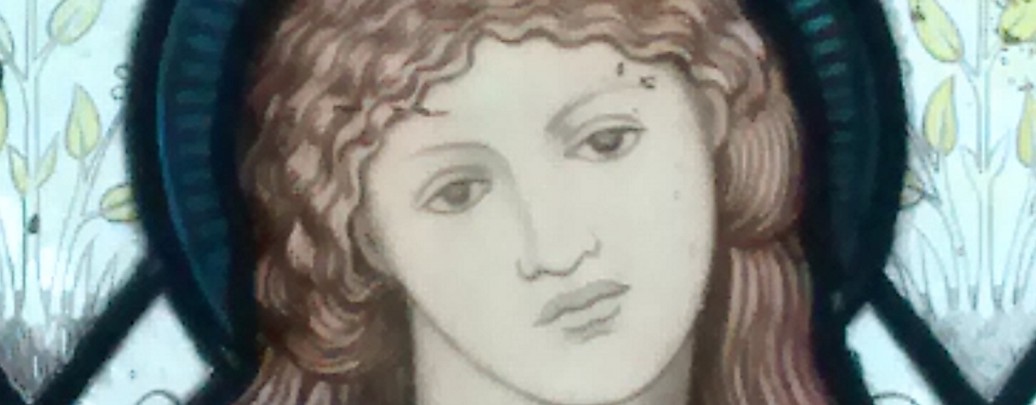
The feminist critique of the Adam and Eve story in Genesis is in many ways quite obvious. There is no doubt that it has been weaponised by mysoginists in religious guise for thousands of years…no doubt that it has in those hands been interpreted to cause harm, but I want to suggest that there is something more important going on; when we say as religious liberals that we want to take the Bible seriously not literally, that’s not to say we think it is equivalent to any fairy-tale or poem. There’s much much more to it than that. Taking it seriously means recognising that it is actually aeons older than the religious traditions which have misused it, and it pre-dates the religious traditions which we most associate it with.
That misogynist agenda has been retrospectively imposed upon it by cultures which had come to manipulate and enslave as a default pattern of social control (and it is worth noting I think that Jesus was in his time one of the fiercest critics of that method of social order) but regardless of that now modern critics including but not only feminist critics have another agenda again, to comprehensively destroy the influence of religion generally and the Bible specifically which is why they make the claim that it is so problematic. But if we unpack it carefully many of the allegations against it simply evaporate.
First I read that as i noted last week God has created and found fault in his creation, God decides to improve on the first creation and add something, – so God recognises the capacity for improvement on what has been created and called good: which creates a headache for much Classic theology but anyway God does, now usually the words are I will make him a helper but I ve done a very lettle research and the Hebrew word ezer which in Eve’s case in Genesis is translated or interpreted helper, helpmeet, when the same word is used in relation to God ezer means ally or even rescuer, so I think if you were going to be fair and looking across a range of the possibilities that companion or ally is about right. Then actually the Hebrew phrase ezer kendego is curious because literally it is I will make him a companion to be against him, in the sense of opposite, or across from or equal to… Robert Alter “sustainer beside him.”
Helen Efthimiadis-Keith a Hebrew scholar has made what she describes as a rudimentary translation from the Hebrew from Ch 2 18
And the LORD God said: “It is not good for the human to be alone. I will make it a partner equal to it.” And the LORD God fashioned from the ground all the creatures of the field and all the birds of the air, and brought them to the human to see what it would call them. And whatever the human being called the living beings, that was their name. And the human gave names to all the animals, and the birds of the air, and all the creatures of the field, but as for a human, it did not find a partner equal to it. 21So the LORD God caused a deep sleep to fall upon the human, and it slept. Then He took out one of its sides15 and closed up its place with flesh. 22And the LORD God built up the side that he had taken from the human into a woman, and brought her to the human. 23 And the human said: “Finally! This one is bone of my bones and flesh of my flesh! This one shall be called woman because this one has been taken out of a man.” 24That is why a man will leave his father and his mother and cleave to his wife and they will become one flesh. 25The two of them were naked – the man and his wife, but they were not ashamed before each other.
So not only have we lost the sense of a helper or the rather quiant helpmeet to be his partner but we also lose the whole concept of the rib. If we are being charitable we can imagine that a translator might have thought “what can it mean “took out one of its sides?”, what is in my side? A rib, it must have meant rib,…”’
But if we return to the text we instead hear a narrative of God creating the human from dust, and splitting the human in half to make the second human, then it makes much more sense, and diminshes the implication that Eve is a lesser creation than Adam …
I’m also uncomfortable with the suggestion that she is lesser because she is derived from the human, the very fact that God recognises that creation is not perfect after all suddenly realises all sorts of possibilities about what God is like, capable of improving upon what has been created for a start…
In Hebrew adam, אָדָם , means, literally, from the ground, earthly or earthy (think also of the continuity of the words humus – soil, and human)
But I don’t usually think that if one thing is derived from another that makes it lesser, a distillation from one thing is not usually ranked as lesser than – I dont think Brandy is less good than wine or that wine is less good than grape juice. I don’t consider Gold to be less good than the ore it was extracted from, I didn’t give my wife a stone ring. Extract the gold from the stone and I value the gold. So I don’t think it follows that to describe Woman as made from Man naturally or necessarily devalues her. That’s surely an ideologically driven interpretation. It’s an inversion of what we would usually recognise. Admittedly the critics who make that inversion are responding to a very long history of misuse of the text but my point is its not in the text.
What we do see is an inversion of the known and natural order for sure, but in the question which came first the mother or the man we will struggle to make good sense anyway and it is the right of a poem or metaphor to utilise all the tools of storytelling to create meaning.
In this religious, this spiritual, metaphorical story the writer is at some pains to tell the story of creation out of language, God speaks into existence light, and water etc. etc. and words do have power to help us grasp the reality of a given thing… we apprehend what we can say and being able to say it calls it out of the darkness and into the realm of the known… as Wittgenstein told us every explanation has to stop somewhere and in this explanation word comes first before matter…
But in our eagerness to dismiss the creation myth in the Bible we shouldnt be too quick either that we might miss what is really being said.
The Fruit, the Tree, and the Serpent (2009),[4] anthropologist Lynne Isbell writes:
The story of Eve is actually quite similar to what I believe the scientific evidence suggests for the origin of primates, including humans.
One of the most accepted hypotheses for the origin of primates suggests that visually guided reaching and plucking (for fruit) was responsible for separating primates from other mammals (Cartmill 1972), a skill that would be especially useful during travel in an arboreal environment (Eve’s Tree).
Isbell suggests that our first ancestors developed taste for fruit and in order to detect the coloured fruit from the green leaves, primates developed visual sense perception which caused their heads to get bigger: then moreover it caused us to move into the trees, where a serious risk was caused by snakes. Snake detection requires another level of awareness entirely and so developing the visual acuity to be capable of snake detection again caused us to develop in a particular direction. The increased brain size necessary to both detect the presence of fruit and reduce the risk from snakes leads to the development of brains that are capable of greater and greater sophistication in particular pattern recognition and colour gradation.
We know today that pain during childbirth is the result of our extraordinarily big headed babies, the price we pay for having brains with a large neocortex. Because areas either directly or indirectly involved in vision occupy approximately half of the neocortex, the behaviors associated with vision and our large brains do indeed cause us to give birth in pain as women deliver babies with large heads.
There is another element to this which we should consider before we leave The Fall behind: the snake is the most cunning of all the animals in some translations it is the most crafty. I just want to consider these words and what they might refer to… in his book The Dawn of everything David Graeber and David Wengrow write:
Harvesting wild plants and turning them into food, medicine and complex structures like baskets or clothing is almost everywhere a female activity. This is not quite an anthropological universal, but it’s about as close to one as you are ever likely to get. … where evidence exists, it points to strong associations between women and plant-based knowledge as far back as one can trace such things. By plant-based knowledge we don’t just mean new ways of working with wild flora to produce food, spices, medicines, pigments or poisons. We also mean the development of fibre-based crafts and industries, and the more abstract forms of knowledge these tend to generate about properties of time, space and structure.
Textiles, basketry, network, matting and cordage were most likely always developed in parallel with the cultivation of edible plants, which also implies the development of mathematical and geometrical knowledge that is (quite literally) intertwined with the practice of these crafts. Women’s association with such knowledge extends back to some of the earliest surviving depictions of the human form: the ubiquitous sculpted female figurines of the last Ice Age with their woven head-gear, string skirts and belts made of cord.
Graeber is one of those cultured despisers of religion who refers to Genesis as “one of the most enduring charters for the hatred of women”, and yet what he describes in his historical anthropology is also part of the Genesis narrative; that wisdom is accessed by Eve, not Adam, and that this form of wisdom, cunning or craft lead to a new relationship with the world.
It is from these twin inheritances, pattern recognition and complex system thinking that not only our larger heads but also our self-consciousness derives, our awareness that we are naked, that we are vulnerable…
One of the greatest lies within which we live is the lie of self-hate. We are everywhere surrounded by external images of unattainable goals and unrealistic selves to which we are invited to aspire. We are enmeshed in an addictive and compulsive context and immersed in a kind of internalised war.
It is only humans who become self-conscious because it is only us who can objectify ourselves, see ourselves as objects viewed by another. The shadow of our immense capacity for conscience is revealed when we project our gaze outside our-selves and then assume the power to turn judgement back on ourselves, as we become self-conscious.
But our self-consciousnes also allows us the facility of reflecting back the light of the Divine, of seeing the face of God lifted to us in nature, in the love of friends animals and children…
There’s a story of a jewish Rebbe who has been arrested as part of the ongoing harrassment of his community and he’s imprisoned overnight with a particularly spiteful jailer who wants to mock his religious beliefs, he goads the rabbi about his invisible friend and all the inconsistencies of his beliefs, and finally he says “Tell me Rabbi, if your God is all knowing, why in Genesis does he call out ‘Where are you?’ The Rabbi finally replies to his tormentor and says, “Dont you understand? Scripture is not for one time, but for all time? When God calls out ‘Where are you?’ he means you – not only Adam – where are you in your life?”
I’m telling this story in conclusion to recognise that scripture is not just story, its not just literature, the sense of fall that pervades and infuses this time of year with a sense of melancholy is a sense that resonates throughout time, throughout humanity:
Song
Oh journeyman, Oh journeyman,
Before this endless belt began
Its cruel revolutions, you and she
Naked in Eden shook the apple tree.
Oh soldier lad, Oh soldier lad,
Before the soul of things turned bad,
She offered you so modestly
A shining apple from the tree.
Oh lonely wife, Oh lonely wife,
Before your lover left this life
He took you in his gentle arms.
How trivial then were life’s alarms.
And though Death taps down every street
Familiar as the postman on his beat,
Remember this, Remember this
That Life has trembled in a kiss
From Genesis to Genesis,
And what’s transfigured will live on
Long after Death has come and gone.
Alun Lewis
 A Space of possibility
Leave a comment