A few weeks ago I went to a one day event at Doncaster Unitarians called Beyond the Scroll, curated by artist led collective Art-Bomb, the day long conference investigated the impact that digital media is having on our sense of reality and interpersonal contact – these artists are seeing, as perhaps we all are, the erosion of social contact and concentration that unchecked digital media is responsible for.
Some of the work was good, some of it was excellent.
One of the works I wasn’t so sure about reminded me of a story about the legendary Hollywood mogul Samuel Goldwyn. Goldwyn was told that a script in development was a film with a message and he snapped: “If I want to send a message I’ll send it Western Union!”
I don’t need to be told what to think by art, the purpose of art must be to reach deeper than that, in fact I’d go so far as to say if you can explain it you probably don’t need to make a piece of art.
Art must be the thing we use to express what we are otherwise unable to express.
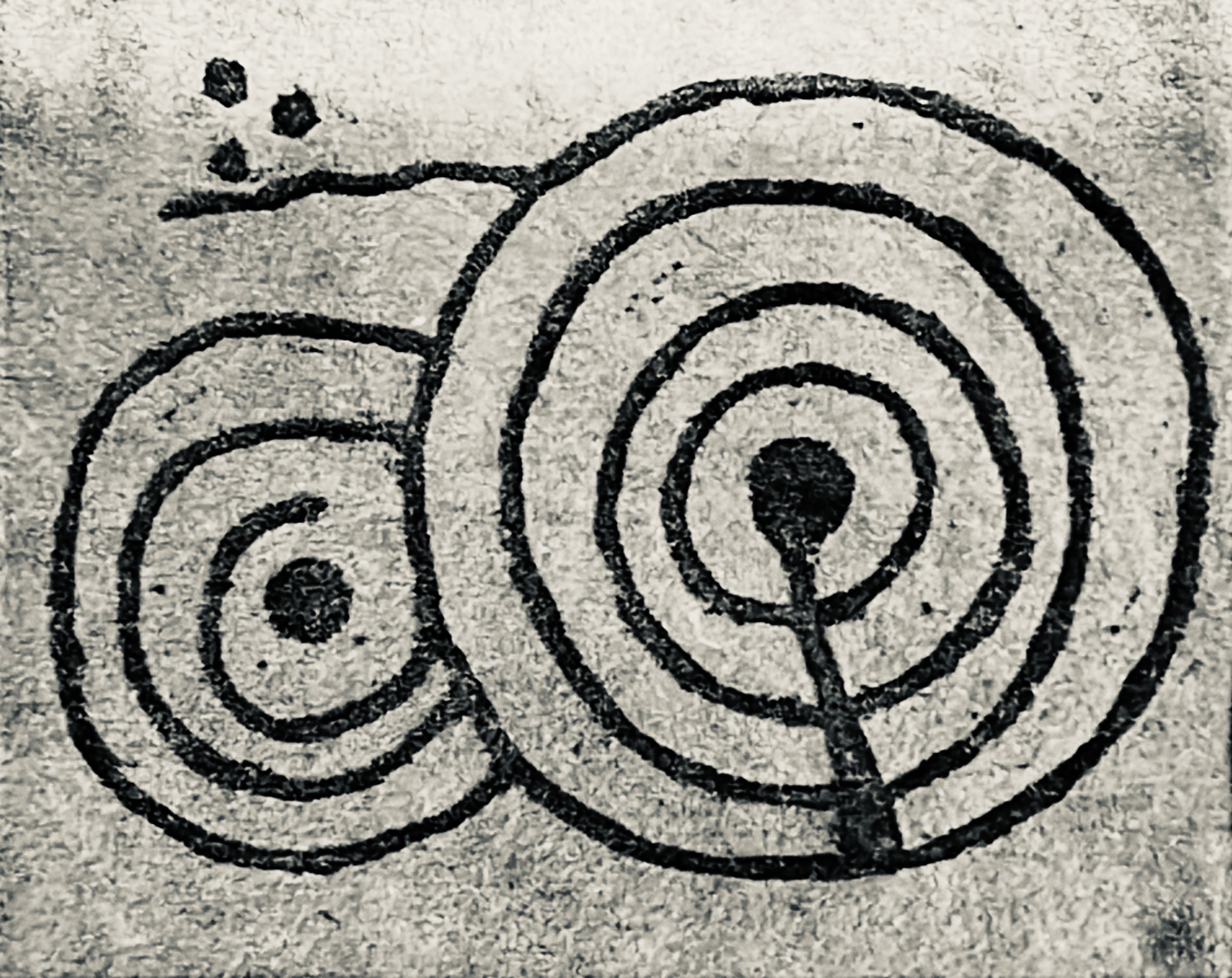
Once art, all art, had as its focus a single idea: to bring the sacred out from its invisible realm into visibility, we can sense this quest in the 40,000 year old art on the walls at Chauvet, or the much more recent petroglyphs at Newgrange only 5000 years ago, its as true of Giotto as it is of Caravaggio, its true of Homer and Dante as it of Shakespeare and Shelley, to bring the sacred into the realm where it can be apprehended, and when art lost that focal point, that reason to exist it had to seek an alternative worthy of making art about.
It seems as if what artists found to fill the vacuum vacated by the sacred was either politics, which can tend to be a bit polemical, or nothingness which can get a bit um, monotonous. If you chose to make art political then like Samuel Goldwyn said, why not just send a telegram? If you can put your message on a poster then save us all the trouble of showing up to an exhibition, I’ll check it on my way to work… and if nothingness is your bag then we can expect a fair amount of waiting for the void to show up, twice.
The ancient purpose of art has been to bring the sacred into focus, to enlighten what was called the genii-loci, the creative spirit of the place, to bring in to focus that spirit which is already here but beyond our ordinary line of vision.
When Michelangelo carved David from a slab of marble he said his job was only to chip away everything that was not David – and indigenous Innuit carvers also use the same phrase to describe what they do, carve away all that is not the creature revealed by their chisel.
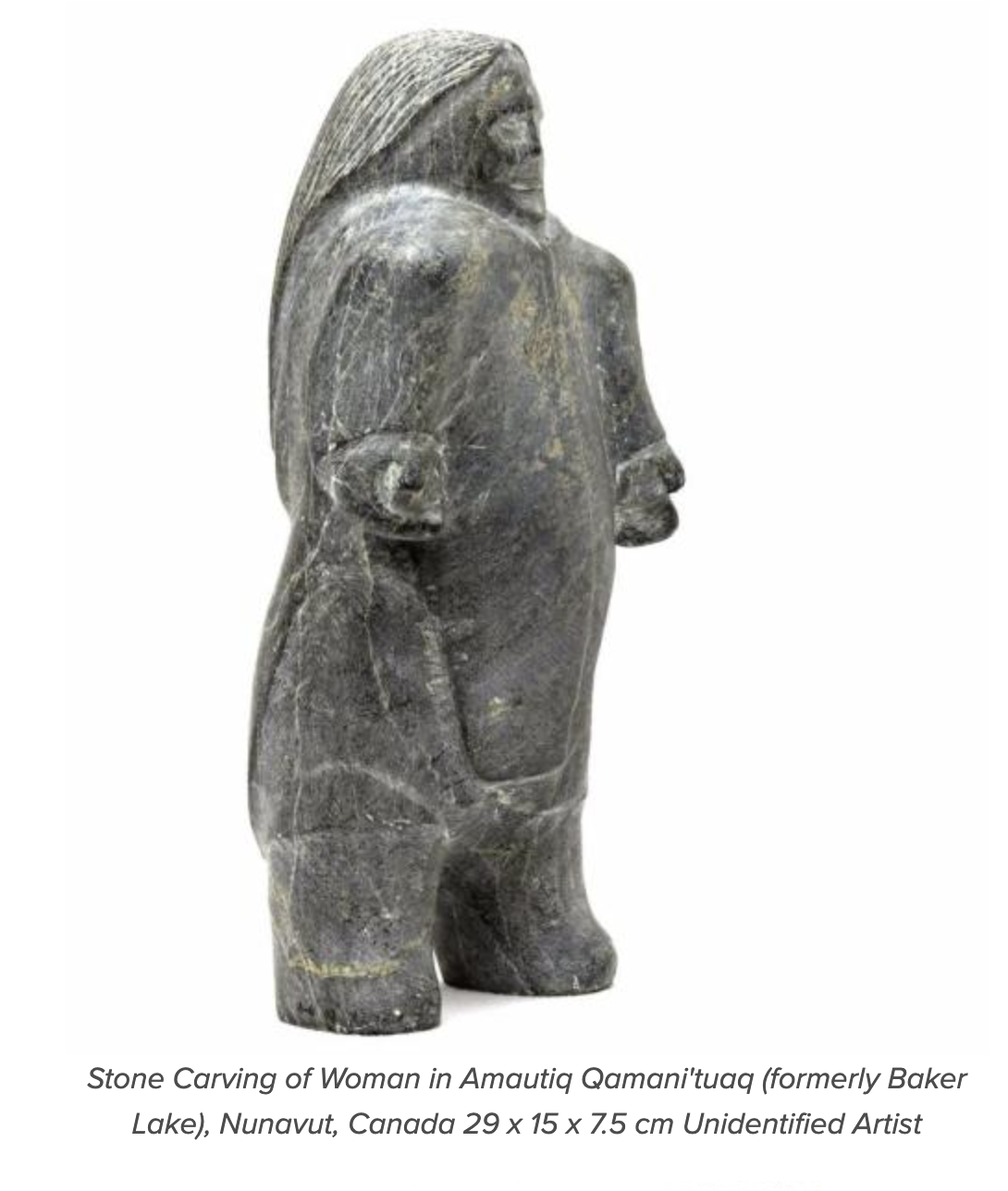
The act of making art is an act of co-creation, a moment when in mythic terms we re-live the seven days of Genesis and, along with the divine, call something into being which wasn’t there before.
When artists do this they describe being in a state of mind which is not ordinary, they sometimes talk about this as if they are possessed:
“I go away somewhere and when i come back there is this play” said the playwright Tom Stoppard, (https://www.bbc.co.uk/sounds/play/m002tbl2) but there are countless examples of musicians, writers and artists who experience the same thing…
The terminology they often use for this is ‘flow’, athletes and sports people often call it ‘being in the zone’, musicians describe being ‘on song’, at one with the music and the other players.
A theorist and researcher called Mihaly Csikszentmihalyi studied and wrote about what happens when you are so completely immersed in an activity that time seems to dissolve, he found that a precondition is the task is at the edge of your capacity and requires total focus, not so easy that it becomes automatic or robotic but not so complicated that you have to over-concentrate. He found that in this state self-consciousness disappears, and work becomes immersive.
He concluded that we don’t naturally achieve happiness from sitting about doing nothing, we are at our most content when in the state he called Flow, when we are able to stop thinking about what you’re doing and do it with total absorption this flow state is really more important than what we ordinarily think of as happiness… and I think all of us have experienced it.
It used to happen to me when I got into a long run of a play when I was acting, and it also used to happen when i was painting and decorating between jobs, it happens when you’re running, or practicing music, or cooking or playing with infants or teaching in a classroom.
Flow is a natural state of union with the sacred, and when we are absorbed totally by something greater than ourselves we seem to lose our ego. In this unboundaried state we become somehow larger than ourselves.
In all kinds of different religious contexts people often talk about this experience of flow in terms of ‘channelling the divine’ or the ‘movement of the spirit’, I was taken aback when I began training to hear clergy describe flow in service of liturgy, and to discover that its a respectable part of the theologies of pietism, quietism, Quakerism and Methodism – and it is part of our religious inheritance too:
The Unitarian theologian James Luther Adams describes* what happened when the creative and spiritual union of religious life took hold of the lives of the people who experienced it, they realised that they could no longer conform to the regulations and hierarchies of their church tradition any more, it over flowed into their political culture. Something that started as an inner experience burst its banks and flooded out into all life.
This is a spirituality of participation and the theology of participation is our background and its context … ours is a participatory spirituality.
We recognise that we can participate in the divine and sacred not as onlookers looking in from the outside or devotees gazing in adoration – but as practitioners of an absorbing activity: and so we seek to discover ways in which this practice could be more like flow and less like work: just like the moment when a musician practicing realises they haven’t noticed the time, what might some practices look like that could re-connect us to this practice of the presence of the sacred? Perhaps it is easier for followers of some traditions like T’ai chi or Yoga where their practices are physically meditative, and perhaps we make it harder in our religious culture when, with dogged persistence we stand apart as constant critics, reading ahead to ensure we agree with the next words of the hymn, never fully allowing ourselves to let go and experience the flow of the moment, the spirit of life that breathes us even as we are breathing…
*in Our responsibility in Society The Essential JLA, Skinner House, 1998, 163-164 see also here
 A Space of possibility
Leave a comment